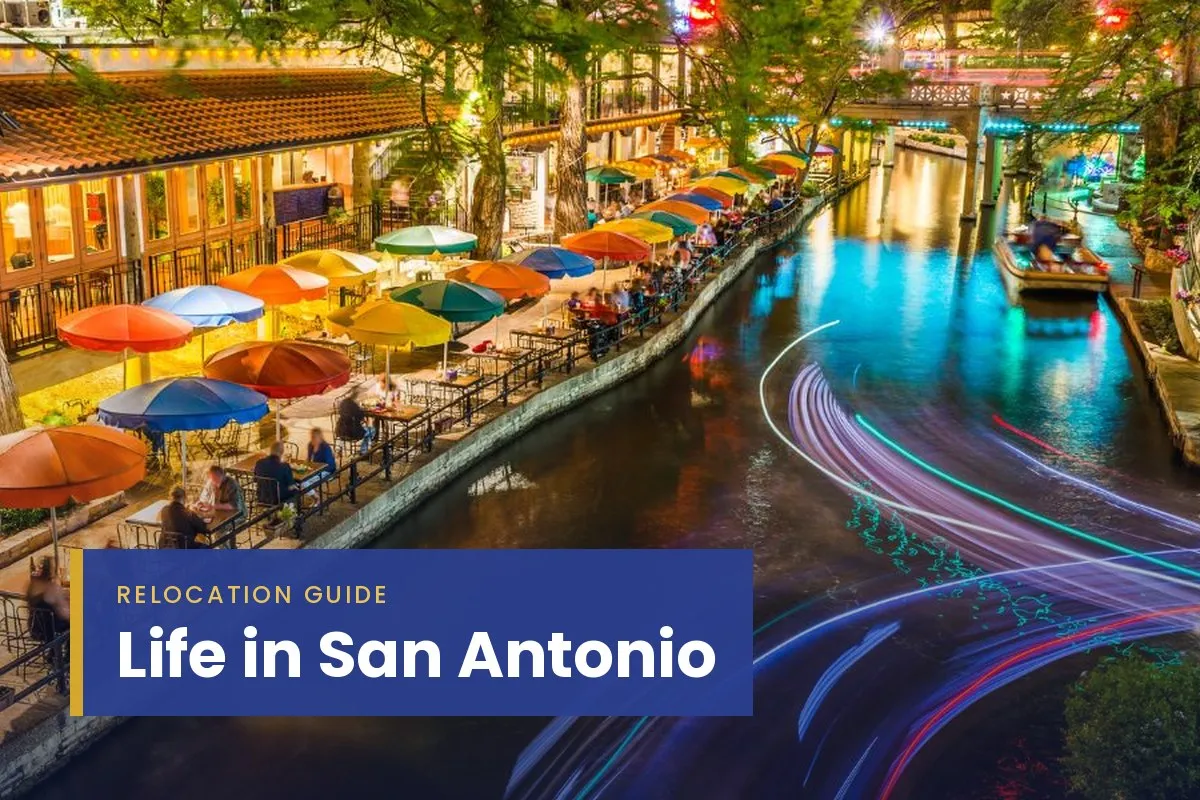
Moving to San Antonio: Daily Life Before You Buy
The short answer: San Antonio is one of the largest cities in the country, but it feels like a small town where people still wave from their cars. Summers are long and warm, and there's a mix of new homes that are ready for move-in and older homes, with room to update and make your own. If you can rent for six months or a year before you buy, you'll find the best neighborhood for the long term.
I've helped families buy homes here for over 20 years. I went to school here and I've lived in different areas, so I've seen a lot of this city. When someone tells me they're moving to San Antonio, I have plenty of experience to share.
It's a big city that feels small
So the first thing that surprises most people is the size. San Antonio has about 1.5 million people and ranks among the ten largest cities in the U.S., but it still has a small-town flavor. I'm always surprised when San Antonio is overlooked in national media in favor of Austin, when San Antonio is about half again as big as Austin.
San Antonio has great museums, like the McNay Art Museum, San Antonio Museum of Art and the Witte Museum. You can catch Broadway shows at the Majestic Theatre. Watch a concert at the Frost Bank Center for arena shows or the Tobin Center, the Aztec Theatre or Sunken Garden Theater for smaller shows. You can cheer on the Spurs downtown or catch a Missions baseball game on a summer night. Our Spanish missions, including the Alamo, are a UNESCO World Heritage Site. Our annual Fiesta fills the city with parades and parties for more than a week every April, and the San Antonio Stock Show & Rodeo draws big crowds every winter.
If you have kids, the DoSeum is a hands-on museum made just for them, and Six Flags Fiesta Texas and SeaWorld are perfect for summer days. You'll also find small-town festivals all over the city and in the towns around it at any time of year.
What people love most is how friendly it is. You can get a smile and greeting everywhere you go and don't be surprised if you get a wave from a neighbor you've never met when you're driving down the street. People are surprised by how friendly everyone is. You can make a new friend just standing in line at H-E-B. That's my favorite thing about living in San Antonio. Even though the city is spread out, it still feels like a small town.
The heat and the allergies
Now let's talk about summer. If you've never lived in heat like this, it can catch you off guard. The humidity makes a big difference in how the heat feels. If you've lived in Florida or anywhere in the Southeast, this probably won't bother you much. But if you're from Arizona or the Southwest, the humidity will take some getting used to. If you're coming from somewhere cooler, give yourself some time to adjust.
Here's how we handle it at my house. We crank up the AC and stay inside during the hottest part of the day. I walk my dog early in the morning or in the evening after the sun goes down. Shade trees or a covered porch can allow you to enjoy your yard a little more in the summer. And plenty of people enjoy a run or a bike ride in the summer. Just stay hydrated.
And summer is the best time to explore. Floating the Comal River in New Braunfels is a great way to spend a Saturday. There are plenty of places within driving distance for camping and hanging out in the water like the Guadalupe River, Blanco River and Canyon Lake.
Keep in mind that allergies can surprise newcomers too. In winter, cedar trees in the Hill Country release clouds of pollen, and locals call the reaction "cedar fever." Then in spring, live oaks coat everything in yellow pollen. If you have allergies, plan for both.
Loop 410 and Loop 1604
Instead of a grid, San Antonio is built around two big loops. Loop 410 is the inner circle. Loop 1604 makes a much bigger circle farther out. Getting around is easier than in a lot of big cities. You can get to most parts of the city quickly using the loops.
And once you get used to it, the loops are an easy way to visualize the city. If you say "inside 410 on the northwest side" or "outside 1604 at Hwy 281," people here know where you mean. It's a simple way to split the city into parts and figure out where you're going.
Of course, you can't avoid the traffic coming with a large population. You'll quickly learn which parts of the loops and other highways to avoid during rush hour. And like any big city, there's always road work going on, and fixes can take time.
If you'd rather ride than drive, VIA runs the city's bus system. Its first rapid bus line, the Green Line, is being built now and is planned to open in 2028.
Choosing a side of town
So when a family asks me where to live, my first question is whether they have kids. School districts can vary a lot from one part of town to the next, so look at the school ratings, school sizes and programs offered. Several districts offer dual-language classes. Some offer specialized training like coding and medical training, or preparatory classes for students who plan to go into health careers, engineering or teaching.
Next, I ask how much they plan to spend. Prices can vary a lot from one neighborhood to the next.
Then we talk about how they want to live. Some people want to walk to restaurants and shopping. Others want a quiet suburb. That choice makes a big difference in where you'll be happy.
The most important step in choosing a location is finding a good local agent who can give you street-by-street details. What I can share is my own experience in very different parts of this city. But no matter where you live, you can visit and enjoy all of the energy and culture that San Antonio has to offer.
Older homes are common here
Just like any growing city, new subdivisions are popping up everywhere. But if you're looking for an existing home in an established neighborhood, you might find you'll need to plan for some repairs and updates. More than half the homes in San Antonio were built before 1990, according to Census data. You usually won't find bidding wars here. You'll find houses with good bones that need some updates.
The oldest homes are in Southtown and near downtown, and many of them sit in historic districts. Homes built in the 1970s and 1980s are very common across the city.
A lot of people buy an older home and fix it up a little at a time. That can work. But there are better ways to handle it. A renovation loan can roll the cost of repairs into your mortgage, so you can take care of the big items when you move in instead of saving for years. You can read more about your options on my Buying a Home page.
Many people are coming home
Here's something I see a lot. Many of my out-of-state clients aren't new to San Antonio at all. Some grew up here, moved away and are now coming back. Many are military families. San Antonio is known as Military City USA, and a lot of people who were stationed here loved it so much they plan to retire here.
Many of these buyers choose the towns around the city. I worked with a family who was moving back to be near relatives, but they didn't want to live in San Antonio itself. They built a home in Castroville, a small town west of the city, and they love it. They're close enough to drive in for events and far enough out to skip most of the traffic. The pace is slower, and that's what they wanted.
What to do first if you're moving from out of state
So when an out-of-state buyer calls me, I start with one question. What's bringing you here? If you have family here, we talk about where they live and how close you want to be. If you're starting fresh, we talk about what kind of neighborhood you're looking for.
If you can rent for six months or a year before buying, you'll get a better feel for the city. You'll have a chance to drive around, check out the different neighborhoods and visit local businesses before you commit.
If you're ready to buy, start with my free Homebuyer Guide. It walks you through each step. When you're ready to plan your move, you can book a time on my calendar.
Frequently asked questions
Is San Antonio a good place to live?
For many families, yes. People are friendly, there's a lot to do, and home prices are lower than in many big cities. The summers are long and warm, so it's a good fit if you enjoy the heat or are used to it.
What are the pros and cons of living in San Antonio?
The biggest pros I hear about are the small-town feel and the lower cost of living compared with many large cities. Texas also has no state income tax. The cons are the summer heat and traffic in some parts of town. Keep in mind that Texas property taxes are higher than in many states. If you live in the home, file for the homestead exemption, which takes $140,000 off your home's value for school district taxes.
Should I rent before I buy in San Antonio?
If you can rent for six months or a year first, you'll learn the city before you pick a neighborhood. If you already know the area you want, buying right away can work well too. A local real estate agent can help you compare areas before you choose.
Can I buy a home in San Antonio before I move here?
Yes. Much of the loan process can be done by phone and email, so you can get started before you arrive. You'll also want a local real estate agent who can tour homes and help you see them from a distance.
Disclosures
All loans subject to credit approval. Not all applicants will qualify. Rates, terms and programs are subject to change without notice. This post is for general information only and is not a commitment to lend. Candy Williams, NMLS #187126. NEXA Lending, NMLS #1660690. Equal Housing Opportunity.